


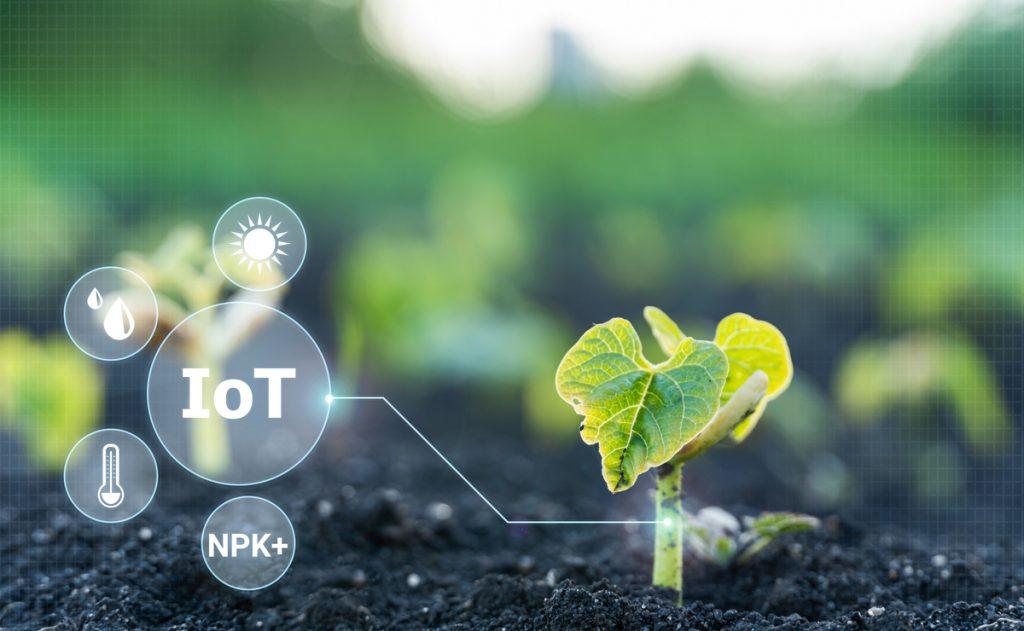
The ancient practice of farming is undergoing a profound digital revolution, driven by the integration of intelligent, connected technologies. The concept of IoT in Agriculture involves deploying a network of sensors, drones, cameras, and other smart devices across farms to collect real-time data on everything from soil moisture and nutrient levels to livestock health and weather conditions. This data is then transmitted to a central platform for analysis, providing farmers with unprecedented insights and control over their operations. By transforming guesswork into data-driven precision, this technological shift is helping to address some of the world's most pressing challenges, including food security for a growing global population, water scarcity, and the environmental impact of farming. This transformation from traditional methods to smart farming is creating a robust economic landscape for technology providers and agricultural producers alike, promising a future of more sustainable, efficient, and productive farming practices that can meet the demands of the 21st century and beyond.
The foundational layer of any smart agriculture system is its diverse array of hardware components, each playing a crucial role in data acquisition. In-field sensors are the primary data collectors, measuring critical environmental variables such as soil moisture, pH levels, ambient temperature, and humidity with high precision. Aerial drones equipped with multispectral and thermal cameras provide a bird's-eye view of crop health, identifying areas of stress, pest infestation, or irrigation issues long before they are visible to the human eye. The IoT in Agriculture Market is Growing at a CAGR of 11.15%, Projected To Reach from USD 10.85 Billion to USD 34.71 Billion During 2025 - 2035. GPS technology is integral to precision farming, enabling automated tractors and machinery to plant seeds, apply fertilizers, and spray pesticides with centimeter-level accuracy, minimizing overlap and waste. For livestock management, wearable biometric collars monitor animal health, location, and activity patterns, alerting farmers to early signs of illness or distress, thereby improving animal welfare and reducing losses.
Once collected, the vast amounts of data generated by these devices must be transmitted, processed, and analyzed to become valuable. This is where the connectivity and software layers of the IoT ecosystem come into play. A variety of communication protocols, including Wi-Fi, cellular (4G/5G), LoRaWAN, and satellite, are used to transmit sensor data from remote fields to a central gateway and then to the cloud. In the cloud, powerful analytics platforms and machine learning algorithms process this raw data, transforming it into actionable insights. For example, soil sensor data can be used to create a dynamic irrigation schedule that delivers water only when and where it is needed. Drone imagery can be analyzed to generate a variable-rate prescription map for fertilizer application. These insights are then delivered to the farmer through intuitive dashboards on a smartphone, tablet, or computer, empowering them to make informed, real-time decisions that optimize resource use and improve operational outcomes.
The tangible benefits of implementing IoT in agriculture are both economically and environmentally significant, creating a compelling case for adoption. For farmers, the primary advantage is increased efficiency and profitability. Precision irrigation can reduce water consumption by up to 50%, while targeted application of fertilizers and pesticides lowers input costs and boosts crop yields. Automated machinery reduces labor costs and allows for 24/7 operation, increasing overall farm productivity. For livestock farmers, continuous health monitoring leads to lower mortality rates and improved herd management. From an environmental perspective, these technologies promote sustainability by conserving water, reducing chemical runoff into waterways, and lowering the carbon footprint associated with farming operations. By enabling farmers to produce more food with fewer resources, IoT in agriculture is a critical tool for building a more resilient and sustainable global food system for future generations.
Explore Our Latest Trending Reports:

 English
 Arabic
 Spanish
 Portuguese
 Deutsch
 Turkish
 Dutch
Dutch
 Italiano
 Russian
 Romaian
 Portuguese (Brazil)
 Tiếng Việt