
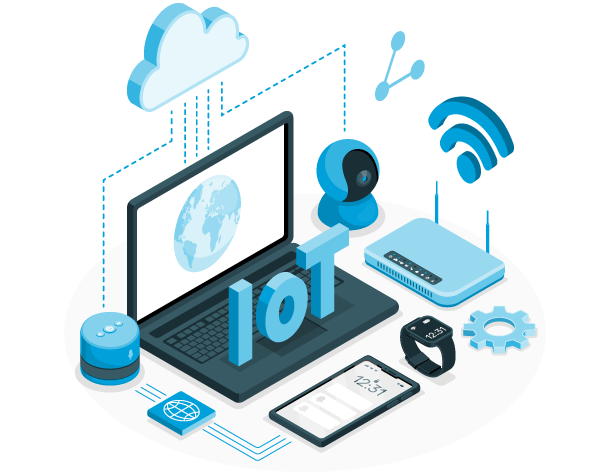
The leading verticals with demand for iot solutions are significantly represented by retail, where connected technologies are transforming store operations, inventory management, customer experience, and supply chain visibility across physical and digital commerce environments. Retail organizations face intense competitive pressure from e-commerce and changing consumer expectations, driving adoption of IoT solutions that enhance operational efficiency and customer engagement. The complexity of omnichannel retail operations, requiring coordination across physical stores, distribution centers, and digital platforms, creates particular demand for IoT-enabled visibility and integration. Connected retail technologies generate rich data streams supporting personalization, optimization, and real-time decision-making across commerce operations. The leading verticals with demand for iot solutions are is projected to grow USD 2426.55 Billion by 2035, exhibiting a CAGR of 15.01% during the forecast period 2025-2035. Retail represents a growing contributor to this expansion as organizations pursue digital transformation initiatives addressing competitive challenges and evolving consumer expectations. The transformation of retail through IoT solutions creates differentiated shopping experiences while improving operational economics across the sector.
Inventory management and supply chain visibility represent foundational retail IoT applications that ensure product availability while optimizing stock investment across distribution networks and store locations. RFID tagging enables item-level visibility throughout supply chains, from manufacturing through distribution to retail floor and point of sale. Shelf monitoring uses sensors, cameras, or robotic systems to detect out-of-stock conditions and planogram compliance, triggering replenishment before customers encounter empty shelves. Backroom inventory tracking provides accurate counts and locations for merchandise not yet displayed, enabling efficient restocking and order fulfillment. Temperature monitoring ensures appropriate conditions for perishable products throughout cold chains from suppliers through store display. Shrinkage detection identifies potential theft, loss, or damage through real-time inventory discrepancy identification. Warehouse automation integrates IoT connectivity with robotic picking, sorting, and storage systems for efficient fulfillment operations. Transportation tracking provides visibility into shipment location and condition throughout delivery from distribution centers to stores. These inventory applications improve product availability while reducing working capital investment and waste.
Store operations optimization leverages IoT for energy management, checkout efficiency, and facility maintenance that reduce operating costs while enhancing customer and employee experiences. Energy management systems optimize lighting, HVAC, and refrigeration operations based on occupancy, merchandise requirements, and time of day. Queue management monitors checkout congestion and directs staffing resources to minimize customer wait times. Electronic shelf labels enable dynamic pricing updates without manual tag changes, supporting promotional execution and competitive response. Equipment monitoring predicts maintenance needs for refrigeration, HVAC, and other critical store systems before failures disrupt operations. Security systems integrate video analytics, electronic article surveillance, and access control for comprehensive loss prevention. Digital signage delivers targeted content based on location, time, and audience characteristics for marketing effectiveness. Facility cleaning and maintenance scheduling optimizes resource allocation based on traffic patterns and condition monitoring. These store operations applications reduce costs while creating more pleasant shopping environments for customers.
Customer experience enhancement leverages IoT for personalization, convenience, and engagement that differentiate retail experiences and build customer loyalty in competitive markets. Beacon technology enables location-based messaging, navigation assistance, and personalized offers for customers with mobile applications. Fitting room technology provides product information, alternative suggestions, and associate assistance requests through connected mirrors and displays. Smart shopping carts and baskets provide navigation, product information, and frictionless checkout capabilities. Customer traffic analytics reveal movement patterns, dwell times, and engagement levels across store environments. Heat mapping identifies high-traffic areas and product attention levels for merchandising optimization. Endless aisle solutions enable in-store ordering from extended assortments not physically present through connected kiosks. Cashierless checkout eliminates traditional scanning and payment processes through computer vision and sensor fusion. These customer experience applications create differentiated shopping experiences that drive loyalty and competitive advantage.
Top Trending Reports -
Micro Segmentation Technology Market Trends

 English
 Arabic
 French
 Spanish
 Portuguese
 Deutsch
 Turkish
 Dutch
Dutch
 Italiano
 Russian
 Romaian
 Portuguese (Brazil)